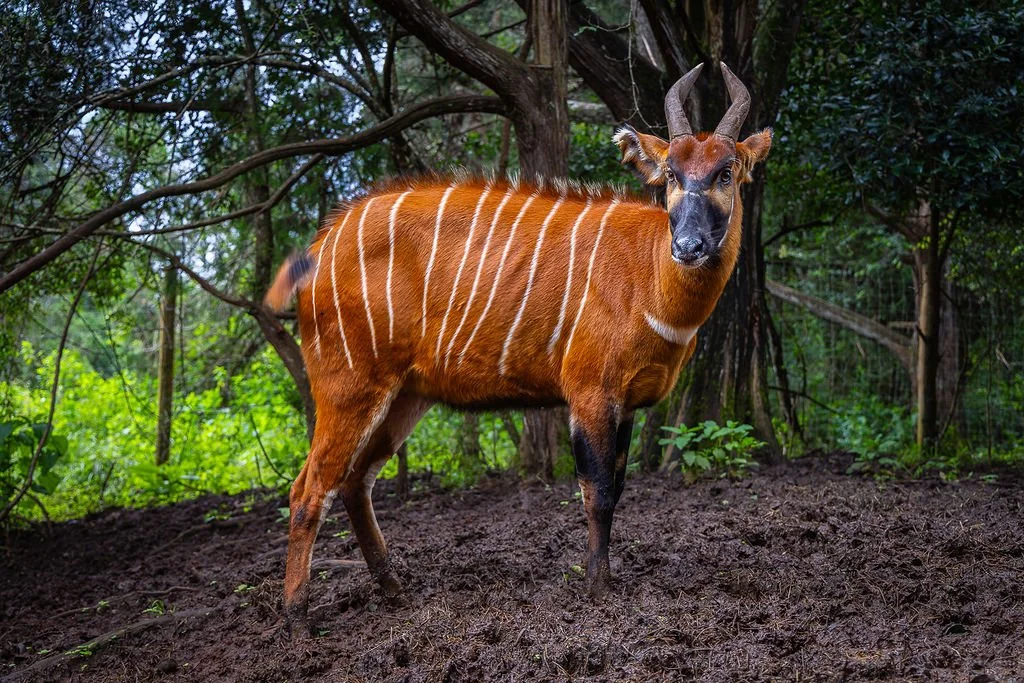
My reflections in nine years, two exhibitions, a hundred wild Mountain Bongos, and the question that drives it all: what images move Africans to reconnect with nature?
“The day before World Bongo Day, I was walking towards the exhibition site to assess the space. A security guard passed by, looked at me, and said one word: “Bongo.” I said it back. And just like that, two strangers connected by nothing but a critically endangered antelope and a shared moment had found a common language.”
That is what conservation photography does when it works. It creates new greetings. It builds bridges between people who have never met. And if we are doing our job well, it changes what those people do when they leave the room.
My First Exhibition Was in My Own Village
Exhibitions are not new to me. My first was held in my own village, not in a gallery, not in a city, but in the community I come from. And that was the moment I understood something that no photography school had taught me: the communities we come from or work with are the custodians of the stories we hold.
During that exhibition, community members quietly walked through the images. When we gathered for our baraza to talk about what they had seen, I made a deliberate choice: I stayed silent. As the photographer, all I did was listen. But what I was really doing was verifying the article I had written with my own community, not for them. It was one of the most powerful moments of my career. That story was later exhibited in Egypt, Benin, and Uganda
“The communities we are from or work with are the custodians of the stories we hold. My job as a photographer is not to tell their story, it is to help them recognise it in the frame”
Nine Years Later: A Mall, A Hundred Strangers, and One Hundred Bongos
My second exhibition came nine years later in a very different setting. A busy shopping mall in the heart of Nairobi. The context could not have been more different from a village baraza. When people first walked in, many thought the photographs were paintings and that they were for sale. I had to stop them and explain: we are celebrating World Bongo Day. The Mountain Bongo. There are fewer than 100 left in the wild.
Some were visibly surprised. They asked: what is being done? What can I do? And in those moments, stepping in as an educator, walking them through the images, watching their faces shift from curiosity to concern to something resembling resolve — I was reminded of why this work matters. The camera is not just a tool for recording. It is a tool for reconnecting.

What Images Move Africans to Reconnect with Nature?
One of my core research questions as a conservation photographer is this: what does image framing really mean to an African audience? What visual language moves people who have grown up in these landscapes people for whom wildlife is not a distant abstraction but a lived reality to care, to act, to protect?
And beneath that question lies a deeper one: how can I use the camera to decolonise the definition of wildlife among Africans? For too long, the dominant images of African wildlife have been created for, and consumed by, audiences outside the continent. The animals are framed as spectacle. The people who live alongside them are made invisible.
This exhibition was, in part, an attempt to answer those questions. We ran a visitor survey and the data told us things that both confirmed our instincts and surprised us.
What the Data Revealed About Conservation Photography in Africa
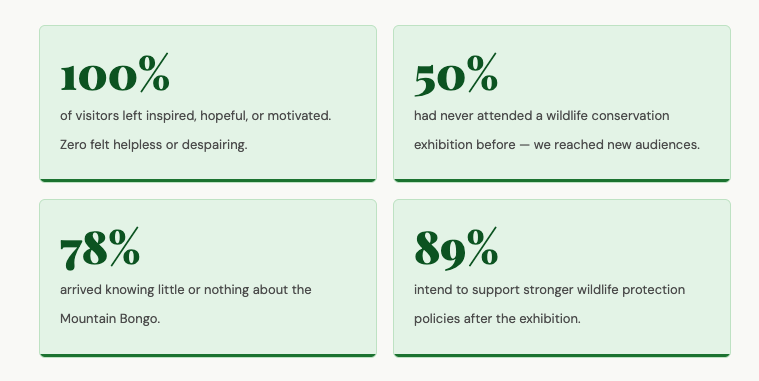
These numbers matter. They tell us that the exhibition reached beyond the conservation echo chamber it found people who had never engaged with this world before, and it moved them. Not to despair, but to action. But what moved them most? The open responses were revealing. It was not the most technically accomplished photographs. It was the ones with the most human presence.
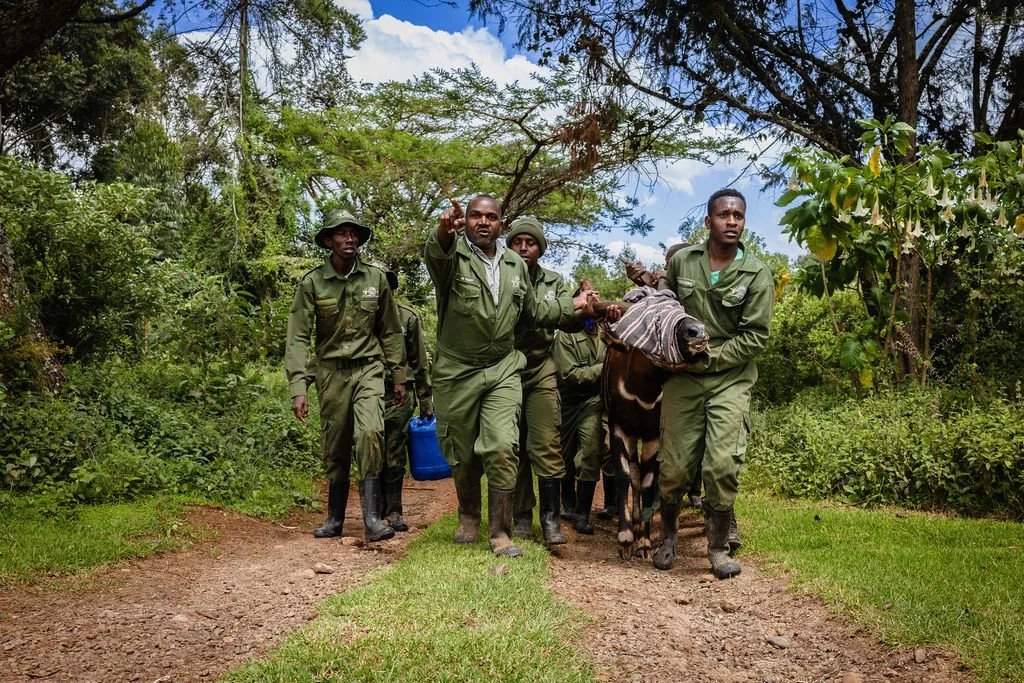
Wildlife Protectors Carrying Bongos
Images of humans actively involved in conservation physically carrying, handling, caring for the animals were cited most frequently as the most powerful. People want to see people in conservation.
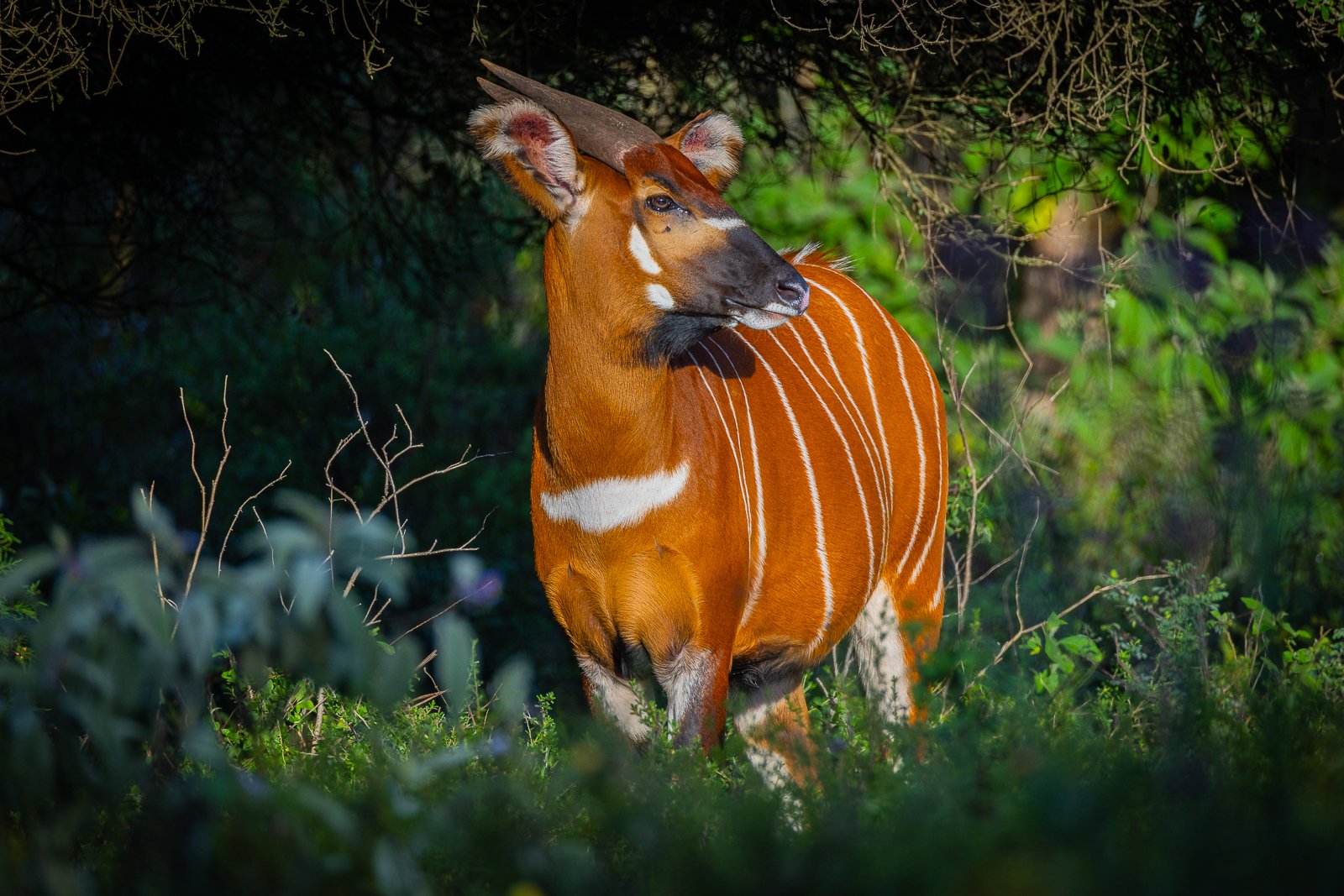
Named Individual Animals: Hekima & Tiki
When visitors knew an animal's name, the relationship changed. Hekima and Tiki were not a species they were individuals. That distinction drives empathy in a way that statistics cannot.
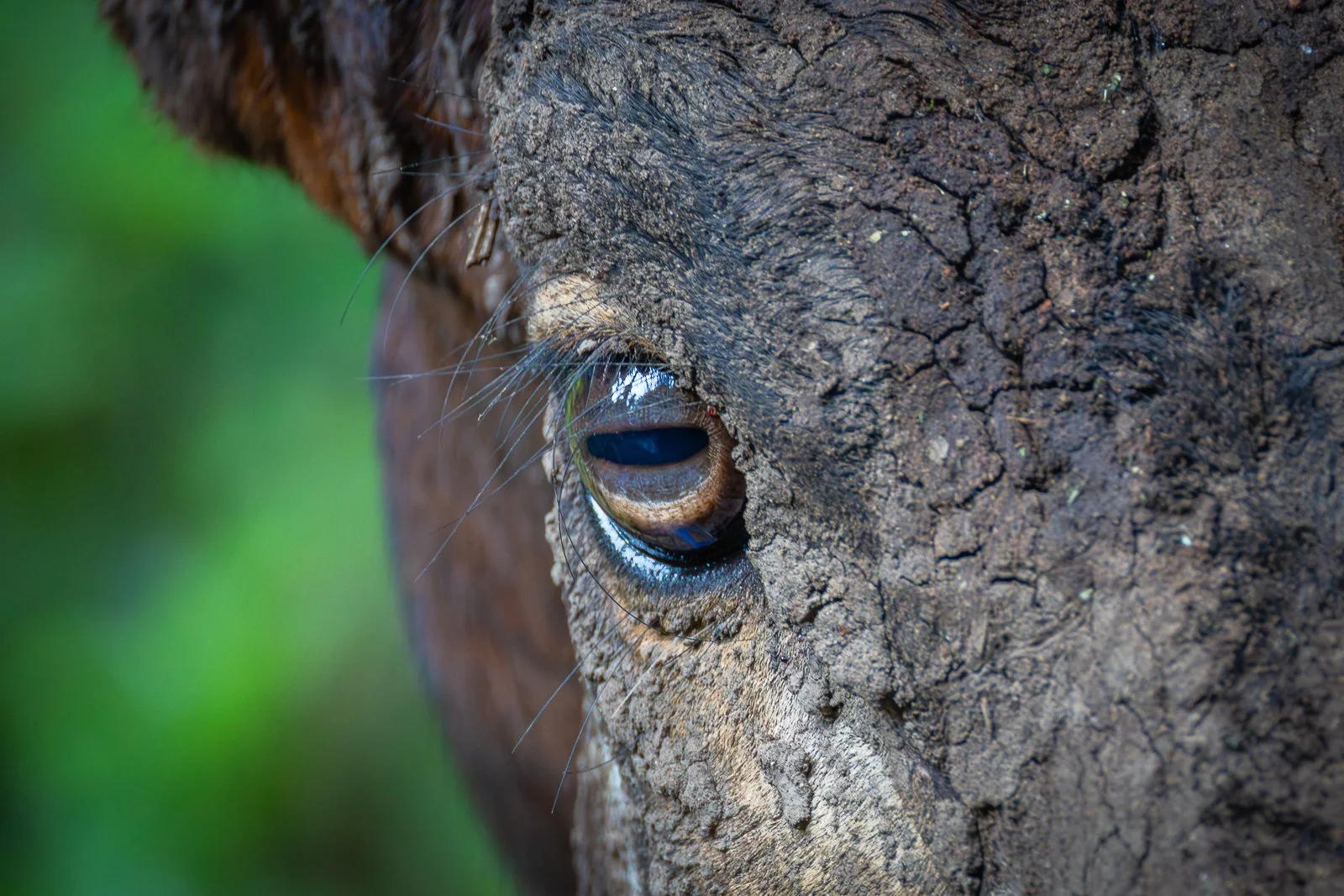
Eye Contact and Close-Up Portraiture
Close-up images where the Bongo looked directly into the lens were consistently described as striking. Eye contact creates recognition, the sense of being seen by the animal, not just observing it
“That conversation trickles down to our ballot boxes.”
And then there was this response, which stopped me completely: One visitor, someone who came to a shopping mall and found themselves standing in front of photographs of an endangered antelope made the connection between wildlife and democracy, between ecosystems and governance. That is the kind of thinking that changes policy. That is what images can do when they get into the right rooms.
Images Need to Get Into the Right Rooms
What I have learned, nine years and two exhibitions in, is this: the image is only as powerful as the room it enters. A photograph that moves a village elder in Samburu, a professional in Nairobi, and a policymaker in Parliament that photograph has done its work. But it has to be in front of those people first.
I hope one day to exhibit not only inside our parliament, but in the major cities of East Africa, to stand in front of decision-makers and say: this is what we are protecting. This is who is protecting it. This is what is at stake.
Conservation photography, at its best, is not about the animal alone. It is about the relationship between the animal, the land, the people, and the systems that govern all three. The camera is how we make that relationship visible. And making things visible is how we make them impossible to ignore.
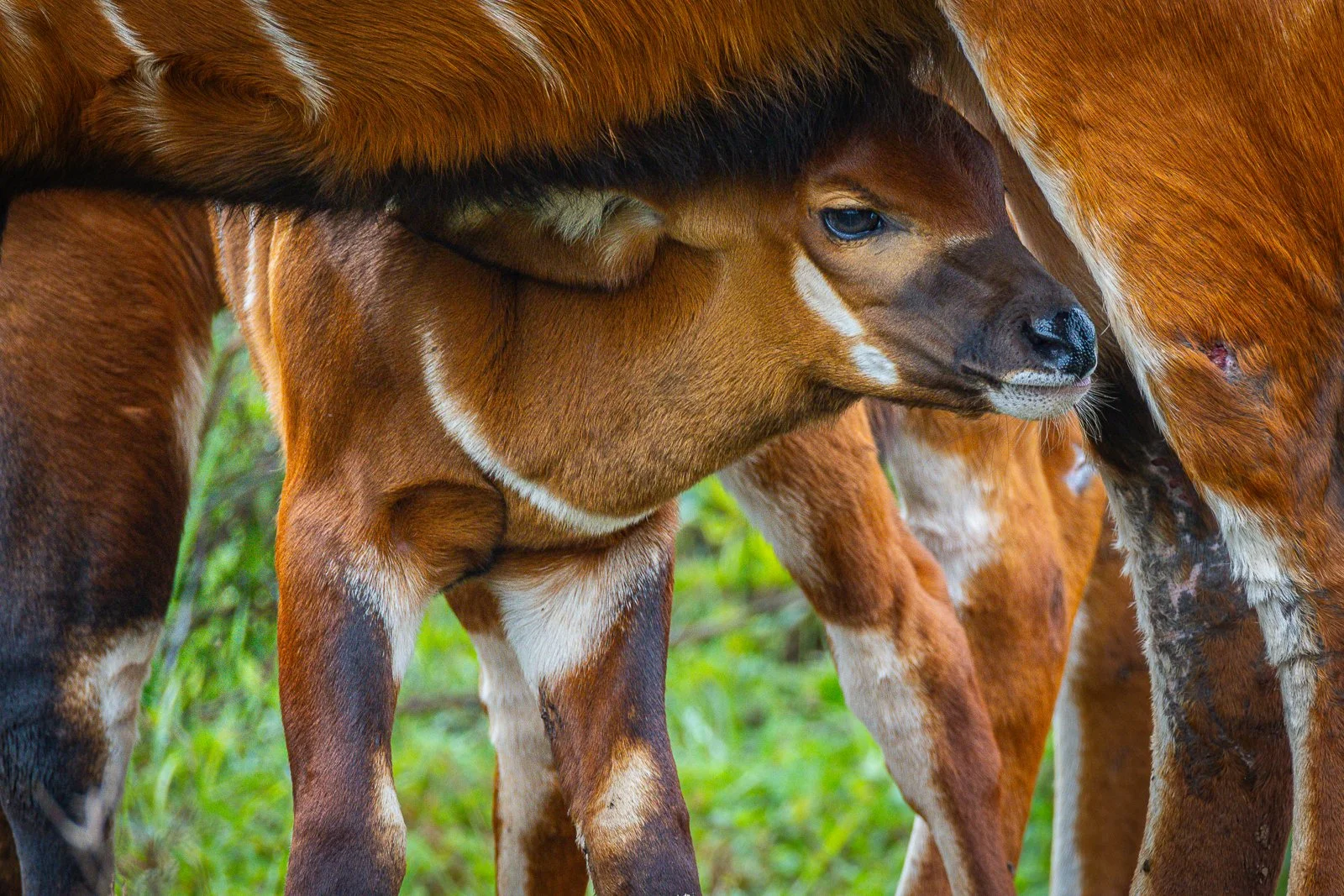
The Mountain Bongo is still here. Barely. But when a security guard and a stranger can find each other through a single word Bongo the story is still alive.
And as long as the story is alive, so is the hope.
The forest is not silent. Let us keep telling its stories.